Genelec 8331A Review: The Ones That Made Me Rethink My Whole Monitoring Chain
Most people buying a pair of 8331A monitors get the upgrade backwards. They audition the speaker, love the midrange, and assume the room will sort itself out later. Then they set them up near a wall, in a corner, on a desk that resonates, and conclude the coaxial driver “sounds clinical.” It doesn’t. You gave it a bad room and no calibration.
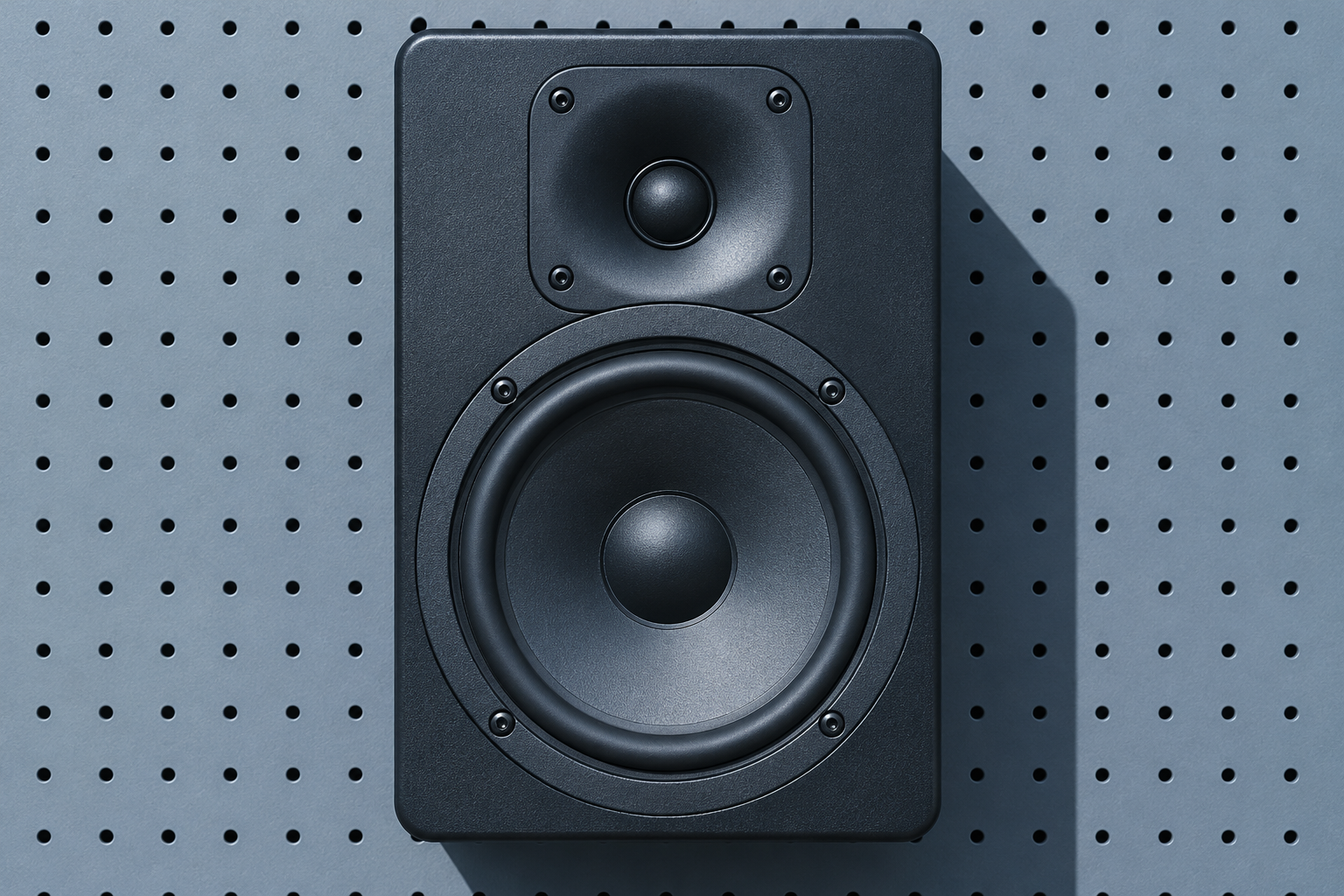
The Genelec 8331A is the smallest model in the SAM (Smart Active Monitoring) range, roughly an eight-litre cabinet with a coaxial mid-treble assembly and a pair of oval woofers. That geometry is the whole point: the acoustic source stays physically aligned at one point across a wide listening window, so the crossover between drivers stops smearing your imaging. It is also one of the few monitors in this bracket that hands you the tools to fix what your room does to it, rather than leaving you to guess.
What the coaxial design actually changes
Conventional two-ways put the tweeter above the woofer, which means your ears hear a vertical crossover irregularity the moment you move up or down. On a desk, mixing at a fixed height, you can live with it. But tracking or checking a mix from a chair that rolls, or leaning back, that lobing shows up as a tone shift.
With a true coaxial you get consistent response across a broad angle, both horizontally and vertically. In practice this translates to a mix that holds together when you walk into the next room, because you weren’t accidentally solving a phantom centre in a narrow sweet spot. My first week with them, I kept getting up to check whether the stereo image had collapsed. It hadn’t. The speakers were just telling the truth about what was on the track.
The trade-off is that a coaxial driver concentrates heat in a small area, so these are nearfields, not mains. Push them to club levels in a big room and they will compress sooner than a larger cabinet. That is the honest boundary of the design, not a fault.
GLM and the room correction is the real feature
Strip away the marketing and the 8331A is two things: a very good small coaxial monitor, and an entry point into Genelec’s GLM calibration system. The second is what makes me recommend them over cheaper competitors even when the raw cabinet alone wouldn’t win.
You run the GLM AutoCal with the measurement mic, and the software profiles each speaker’s response in your actual room, then applies correction with a target curve you can adjust. It also handles bass management and level alignment across the pair. If you have ever spent an afternoon nudging a speaker two centimetres to chase a null, this is the end of that ritual.
Correction isn’t magic. It cannot fix a deep, narrow null caused by a wall reflection, because those dips are positions, not EQ problems. What GLM does well is tame broad low-frequency peaks and get the pair matched to each other and to your room, so you stop making decisions against a coloured bottom end. The room still matters. Treatment and placement come first. The 8331A just makes the last stretch of that work far easier than a passive monitor ever could.
The bits that will annoy you
These are not plug-and-play. You need the GLM kit and network cabling to unlock the calibration, and the price of entry is higher than the cabinet alone suggests. Factor the whole system in before you commit; buying the speakers and skipping GLM is throwing away the main reason to own them.
They also want care with source. Feeding a monitor this revealing a noisy preamp or a laptop headphone jack will expose everything upstream. My first sessions sounded harsh until I moved to a cleaner interface and set sensible levels. The 8331A doesn’t add character. It subtracts excuses.
The oval woofers also impose a placement constraint. They are designed to sit with the cabinet fairly close to a wall or console, and the rear controls and mounting are geared toward that. If you insist on pulling them far out into free space on tall stands, you are fighting the design and will spend a lot of time with correction curves. Work with them, not against them.
Who these are for, and who should look elsewhere
If you mix in a small-to-medium treated room and you are tired of guessing whether a low-end build-up is real, the 8331A plus GLM is a genuinely sensible spend. The coaxial imaging and the calibration together remove two of the biggest variables in honest monitoring, and neither is something you can fake with a plugin.
If you have a large room, need serious SPL, or mix for cinema, go up the range. If you are purely tracking and don’t want to think about DSP, a simpler passive speaker and a decent acoustic treatment budget will serve you better and leave money for treatment, which no monitor can replace.
What I will not tell you is that they “sound like nothing.” They sound like an accurate small monitor in a room you have finally tamed, and that is a harder thing to like than a flattering speaker. Give them a treated space, the calibration kit, and clean sources, and they will quietly change how you trust your own ears.