Measuring Speaker Distance With a Tape and a Mic: Why the Numbers Disagree
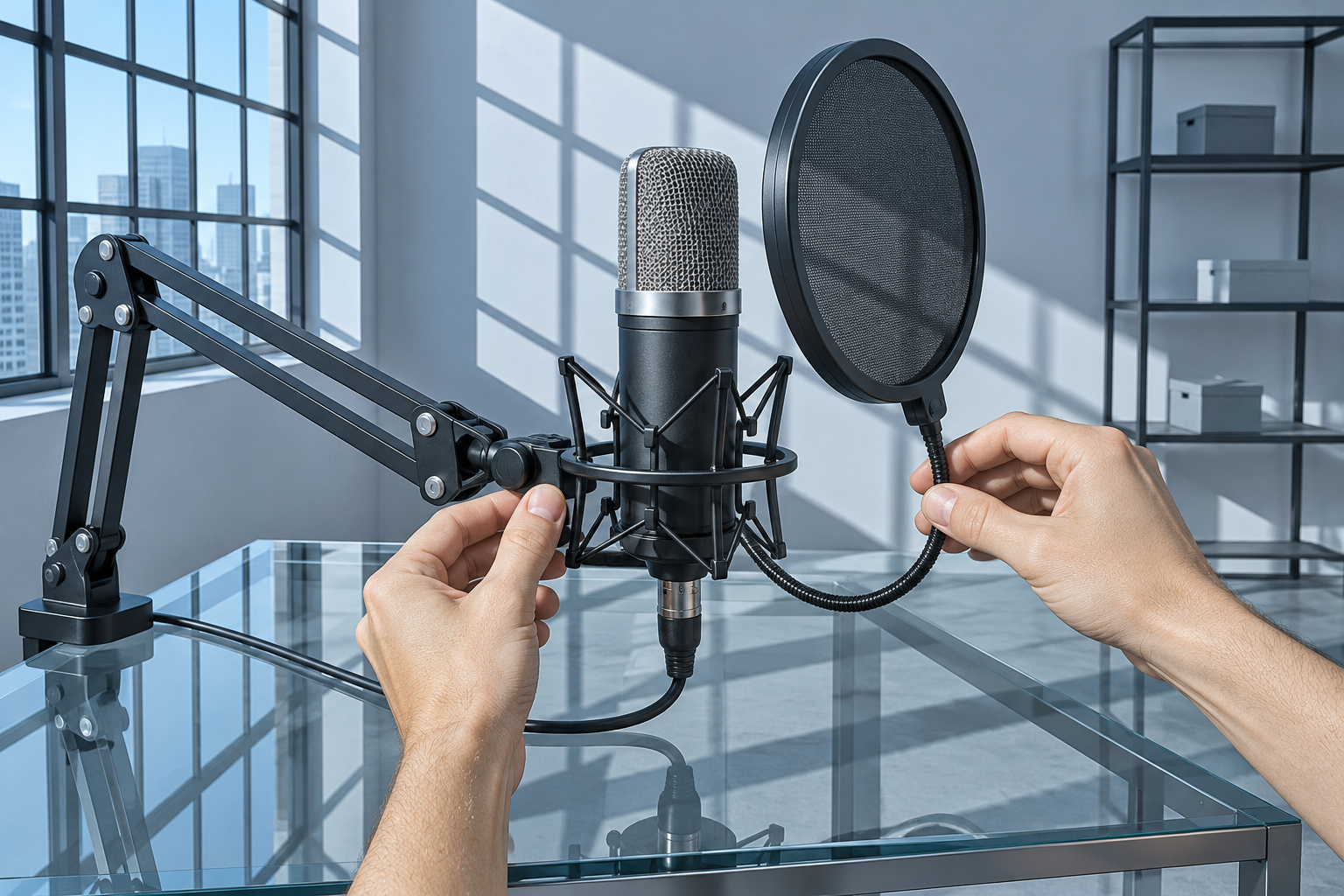
Your tape measure says the left speaker is 214 cm from your ears. Your measurement mic says 208. The room correction software insists both are wrong and wants to add 2.3 ms of delay to the right channel. Three numbers, one sofa, and none of them agree. That gap is not a mistake you made with the tape; it is the difference between two questions that sound identical and aren’t. Once you understand what each method actually measures, the disagreement stops being a problem and starts being useful information.
What the tape is really measuring
A tape measure gives you geometric distance between two points. That is all. It is a real, useful number, and you should still take it, because it tells you whether the two speakers are symmetric and whether the listening position is where you think it is.
What it does not tell you is when the sound arrives. Speaker enclosures place the acoustic center of each driver somewhere behind, ahead of, or beside the front baffle, and that offset is rarely the same between a bookshelf and a floorstander, let alone between two different models. If your left and right cabinets are the same model and positioned the same way, the offset cancels and the tape is honest. If they aren’t, the tape is measuring cabinet fronts, not sound sources.
The other thing the tape ignores is the path the sound actually takes. In a real room, the first arrival is the direct path, and it is usually very close to the geometric distance divided by the speed of sound. Close, not equal. That small residue is the first reason your numbers disagree.
What the mic is really measuring
A measurement sweep records an impulse response. The peak of that impulse, measured from the start of the signal, is the delay for that channel; its sign tells you polarity, which is why room correction software can flag a speaker wired backwards. Multiply the delay by the speed of sound and you get a distance. Software often presents exactly that number because “speaker is 2.08 m away” reads better than “6.06 ms.”
Here is the problem. That impulse peak is not the speaker front. It is the arrival of the strongest early energy at the microphone, which includes the direct sound plus whatever part of the first reflection is close enough in time to merge into the same peak. Lean the mic forward ten centimeters and the peak shifts, because the reflection timing changed. The same room can produce a delay reading that moves a centimeter or two depending on mic height and toe-in, without anything about the speaker having changed.
So the mic is not lying. It is answering a different question: not “how far is the speaker” but “when does the energy arriving at this microphone, at this position, look like it starts.”
Why the two disagree, in plain terms
- Acoustic center vs cabinet front. Real drivers sit at slightly different depths, and the crossover can shift the apparent source between drivers.
- Reflection merging. The impulse peak can be pulled earlier or smeared by a strong nearby boundary. A speaker close to a side wall or a low ceiling is the usual suspect.
- Mic position. A centimeter of movement changes reflection timing, and the impulse peak responds.
- Sample rate and windowing. Delay resolution is limited by the sample interval, and a short analysis window changes which peak the software considers dominant.
- Polarity and driver behavior below crossover. A subwoofer’s arrival can be several milliseconds behind the mains even when the geometric distance is identical, because the driver and its enclosure add group delay.
None of that means the measurement is untrustworthy. It means you should stop reading the distance figure as a physical dimension and start reading it as a relative arrival time, which is the thing you actually correct.
What to do with the discrepancy
Trust the tape for symmetry, and trust the mic for relative timing. Those are two different jobs and mixing them up is where setups go wrong.
Take the tape measurement first, and use it to make the two speakers equidistant from the listening position to within a centimeter or so, measured to the front baffle. That gets the geometry sane. Then run the sweep and read the delays, not the distances. The absolute number matters less than the difference between channels, because the difference is what you correct.
A quick sanity check before you commit anything: measure each channel twice, moving the mic a few centimeters between passes. If the delay reading jumps around by more than a fraction of a millisecond, you have a reflection problem near the mic, not a speaker distance problem, and no amount of correction will fix an unstable measurement. Move the mic, treat the first reflection, or accept that you’re measuring the room and not the speaker.
If you’re working with room correction software that presents the result as a distance, note that its internal correction is based on delay, not geometry. The distance is a convenience display. The correction subtracts each channel’s delay from the peak delay across the system and applies the remainder as additional delay, which is relative timing work dressed up as a ruler. That is exactly correct behavior; it just means the label is friendlier than the math.
The frequency-domain wrinkle
One thing that trips people up: delay correction is not the same as phase alignment across the crossover. Two speakers can have identical impulse peaks and still sum badly at the crossover frequency, because the phase behavior of the two drivers differs. A single delay value per channel cannot fix a phase mismatch that varies with frequency. If your summed response has a deep notch near the crossover, moving the delay by fractions of a millisecond will shift the notch but not remove it, and you’re better off adjusting the crossover point or the driver level than chasing the delay figure.
This is where the two-number disagreement gets genuinely useful. If tape and mic agree closely and the summed response still has a notch, the problem is not distance. If tape and mic disagree by a large margin, the arrival timing is being thrown off by reflections or by a driver offset, and delay correction is the right place to start.
A practical sequence
- Tape measure front baffle to listening position for both speakers. Match them within a centimeter. Write the numbers down.
- Sweep each channel separately with the mic at the exact listening position, tweeter height, pointing at the ceiling or straight ahead depending on your mic’s calibration file.
- Read the impulse delay for each channel, not the distance label. Note the difference.
- Repeat at a second mic position a few centimeters away. If the delay is stable, use it. If it jumps, find and treat the reflection before correcting.
- Apply delay correction based on the relative difference, then re-sweep to confirm the sum.
The tape and the mic will probably never agree exactly, and that’s fine. The tape tells you whether your room is symmetric. The mic tells you whether your arrival times are. Both are true, both are useful, and the correct response to a discrepancy is to figure out which question you’re actually asking before you trust either answer.